Stability is defined as a change (or lack of change) in accuracy over a period of time.
Drift is commonly used as a specification to illustrate the stability, or change in accuracy over a period of time, commonly shown as X%/year where X = a number; i.e. 0.25%/year. In this scenario, a device with a ±1% accuracy, would be expected to have an accuracy of ±1.25% (1%+0.25%) after a period of one year. Depending on the design, brand, and range of the sensing instrument, the stability can vary widely.
There are many benefits in utilizing sensors and instrumentation with great long-term stability.
Stability reduces out-of-calibration issues. If a measurement device drifts out of calibration, it can be measured incorrectly and risk exposure of personnel or patients to harmful microorganisms in pressure monitoring applications in healthcare settings.
HVAC SYSTEMS
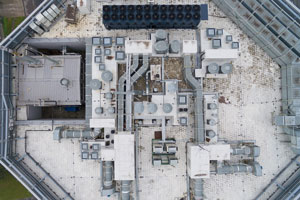
Stability improves HVAC system performance by increasing overall efficiency and reducing the need for costly maintenance. If an air handler, VAV system, or chiller/boiler system is running inefficiently, components are more likely to wear and break down faster than in a more efficient system.
The reduction in downtime associated with maintenance and recalibration is another benefit of stability. Stability helps to ensure full production capacity and can be recalibrated on a scheduled date/time that corresponds to a plant shutdown/plant maintenance schedule.
Stability also ensures patient rooms are available and not out-of-calibration, which is especially useful in healthcare facilities with an above average patient capacity.
In critical environments, stability ensures safety standards are maintained.
SEMICONDUCTOR MANUFACTURING
If pressure, temperature, and relative humidity (RH) are not maintained properly in semiconductor manufacturing areas, it may result in infiltration of dust and particulates from not maintaining a proper differential pressure, a spike or drop in RH, or a change in temperature, which may damage products being manufactured.

PHARMACEUTICAL MANUFACTURING
Similarly, in pharmaceutical manufacturing and compounding areas, if these parameters are not maintained properly, infiltration of microorganisms from not maintaining a proper differential pressure, a spike or drop in RH, or a change in temperature could contaminate drug or provide unsuitable storage/manufacturing conditions.
HEALTHCARE FACILITIES
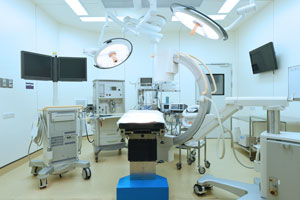
Lastly, the infiltration of viruses, bacteria, or pathogens from or into an isolation room, clean room, and/or operating room is key to maintaining patient and personnel health. Maintaining a proper differential pressure in these critical healthcare environments will help prevent the spreads of illnesses caused by infectious microorganisms.
HOW DWYER CAN HELP
Dwyer’s new Series RPMC StabiliSENSE™ critical room pressure monitor provides the advanced features, high accuracy, and ranges necessary for use with pharmaceutical compounding areas and semiconductor manufacturing facilities.
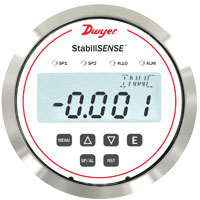
The Series RPMC StabiliSENSE™ critical room pressure monitor can be flush or surface mounted in the same size diameter hole as a Magnehelic® gage. This simplifies upgrades from a Magnehelic® gage to the new room pressure monitors. It comes standard with two independent SPDT relays and a 4-20 mA analog output. The RPMC contains a capacitance cell pressure sensor, providing a high degree of accuracy and long-term stability.
The Series RPMC is a complete system allowing for access to pressure, security, calibration, and alarm setup. Visual indication, an easy-to-clean stainless steel bezel, and passcode protection make pressure monitoring in critical applications easier than ever.
If you have any questions, please leave a comment below
For further information please contact us through number (+84) 903 999 357 , email info@bkic.vn.
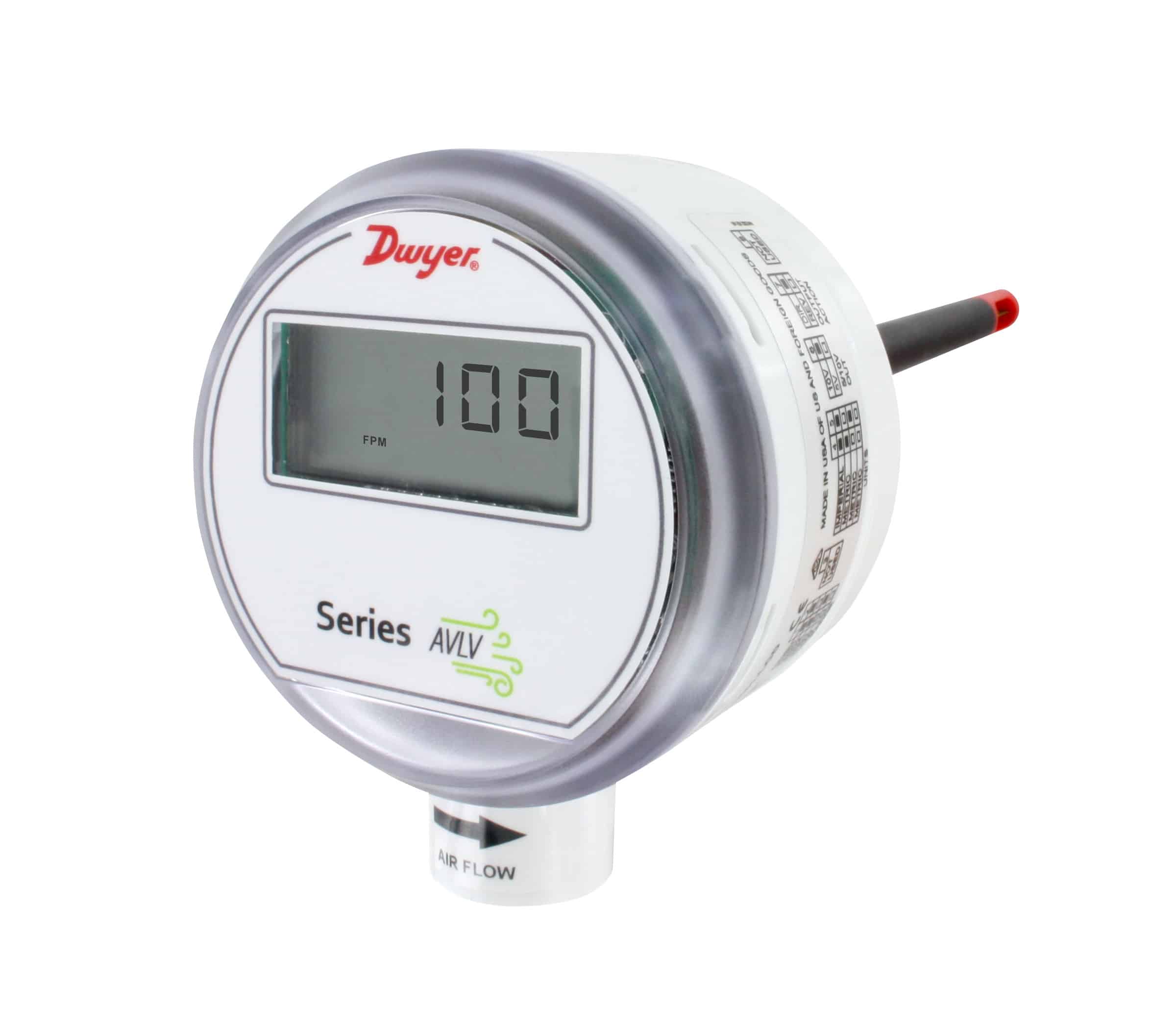
Dwyer Instruments offers a multitude of sensors for monitoring air velocity in HVAC systems. Some of this instrumentation has a simple construction (Pitot tubes, for example) while others are more complex, such as hot-wire anemometers. The initial term and first “hot-wire anemometer” was developed back in 1914 by Louie Vesso King. He is also accredited...
Explore now
From dairy to petrochemicals, several applications require monitoring or control of liquids in tanks. Wastewater facilities are among the many industries requiring meticulous observation. The technology used for this measurement is dependent upon the type of tank and its contents. Capacitive level switches, for example, detect level and send a switch signal output when the...
Explore now

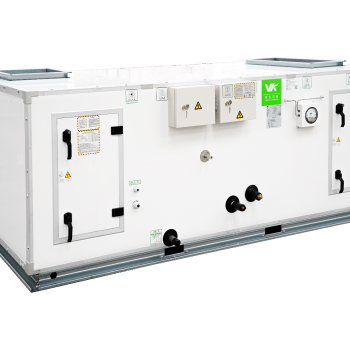 The Modular AHU (VAC series) is engineered to serve environments with stringent requirements for air quality, temperature, and humidity control. Thanks to its flexible modular design, cross-contamination prevention, microbial growth inhibition, and superior thermal insulation performance, the product is ideal for a wide range of diverse applications.
VECK - MODULAR AIR HANDLING UNIT (AHU) - VAC
Explore now
The Modular AHU (VAC series) is engineered to serve environments with stringent requirements for air quality, temperature, and humidity control. Thanks to its flexible modular design, cross-contamination prevention, microbial growth inhibition, and superior thermal insulation performance, the product is ideal for a wide range of diverse applications.
VECK - MODULAR AIR HANDLING UNIT (AHU) - VAC
Explore now
 The VECK VASW Series is a premier air-cooled screw chiller solution, specifically engineered for large-scale central air conditioning systems. By perfectly integrating advanced screw compressor technology with an intelligent control system, VECK is committed to delivering superior cooling efficiency across all weather conditions.
VECK - AIR-COOLED SCREW CHILLER - VASW
Explore now
The VECK VASW Series is a premier air-cooled screw chiller solution, specifically engineered for large-scale central air conditioning systems. By perfectly integrating advanced screw compressor technology with an intelligent control system, VECK is committed to delivering superior cooling efficiency across all weather conditions.
VECK - AIR-COOLED SCREW CHILLER - VASW
Explore now
 The VECK FCU Series is a premium line of Fan Coil Units featuring cutting-edge BLDC motor technology from China. Designed as an optimal solution, it delivers refreshing airflow, ultra-quiet operation, and exceptional energy efficiency. It is the perfect choice for central air conditioning systems in office buildings, hotels, and modern commercial projects.
VECK - FAN COIL UNIT (FCU)
Explore now
The VECK FCU Series is a premium line of Fan Coil Units featuring cutting-edge BLDC motor technology from China. Designed as an optimal solution, it delivers refreshing airflow, ultra-quiet operation, and exceptional energy efficiency. It is the perfect choice for central air conditioning systems in office buildings, hotels, and modern commercial projects.
VECK - FAN COIL UNIT (FCU)
Explore now
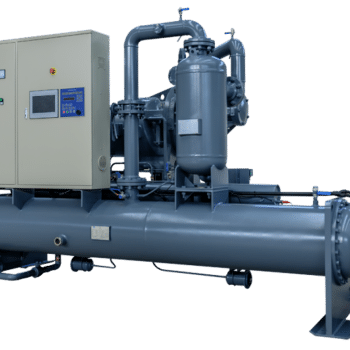 The Ebara RHSCW Series is a water-cooled screw chiller line featuring Japan's leading twin-screw compression technology. It is an optimal solution designed to provide a stable chilled water supply for central air-conditioning systems and large-scale industrial cooling processes.
EBARA-HIGH EFFICIENCY SCREW CHILLER-RHSCW
Explore now
The Ebara RHSCW Series is a water-cooled screw chiller line featuring Japan's leading twin-screw compression technology. It is an optimal solution designed to provide a stable chilled water supply for central air-conditioning systems and large-scale industrial cooling processes.
EBARA-HIGH EFFICIENCY SCREW CHILLER-RHSCW
Explore now