At one point or another we have all been exposed to some form of an electrostatic discharge (ESD) event, even something as simple as walking across a carpeted space, touching a door knob, and receiving an unexpected jolt. These types of events are very common in instrumentation applications. Today we will discuss what ESD is, the effects it has on instrumentation, and the steps that Dwyer Instruments has taken to prevent damage to sensors susceptible to these events.
Electrostatic discharge (ESD) occurs when an object containing a positive charge comes in contact with an object containing a negative charge. ESD is defined as the sudden flow of electricity between two electrically charged objects, and it occurs when objects with opposite charge are brought within a close vicinity of one another. Sometimes this event is accompanied with a visible spark. There are many causes for ESD such as an electrical short, contact, or dielectric breakdown.
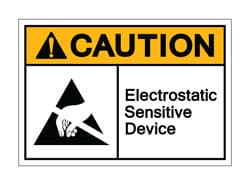
This phenomenon can be harmful to a variety of different industries, resulting in explosions in hazardous areas, or failure of solid state electronic components located in integrated circuits. When these environments are exposed to high voltages, they can suffer permanent damage. Dwyer Instruments, Inc. has taken precautions as a manufacturer to prevent the buildup of static charge. These precautions include: avoiding materials that will hold a static charge, providing detailed instructions of proper grounding practices to workers interacting with the product by using anti-static devices, and monitoring the humidity levels in a workspace.
Two of the main ways to prevent ESD is to invest in high quality, non-conductive material and to ground out those materials to add resistance to ESD. Utilizing better components in our products also provides higher ESD prevention. This means that you will not only have a more durable, high quality product, but you will also be safer when using it. Proper grounding prevents the buildup of static electricity and yields a neutral charge.
Unfortunately, some products are more susceptible to ESD events due to the nature of the application that they are used in. Duct mounted humidity transmitters are commonly mounted in moving airstreams, leading to a buildup of electrically charged ions down the plastic or stainless steel duct probe. These charged ions will move through the path of least resistance (which is typically a cap, filter, or other material around the humidity sensor to protect it from particulates, dust, and other types of foreign objects that may damage the sensor). The material chosen for this cap or filter, as well as spacing between the cap and humidity sensor, can greatly affect the humidity sensor’s resistance to ESD events.
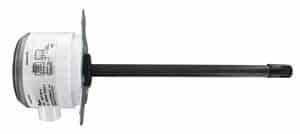
Dwyer duct mount humidity sensors are tested to meet current CE contact and air discharge events at a minimum, with many designs for greater resilience. By designing a device that minimizes the path of resistance away from the humidity sensor, improved longevity of the product can be achieved. Incorporating these designs into instrumentation like the Humidity/Temperature Transmitter, Series RHP, helps to minimize labor and installation time for wiring additional ground protection on the sensor and ultimately increases the usable lifespan of the sensors.
For more information or to learn about the complete Dwyer humidity product portfolio, please visit our website.
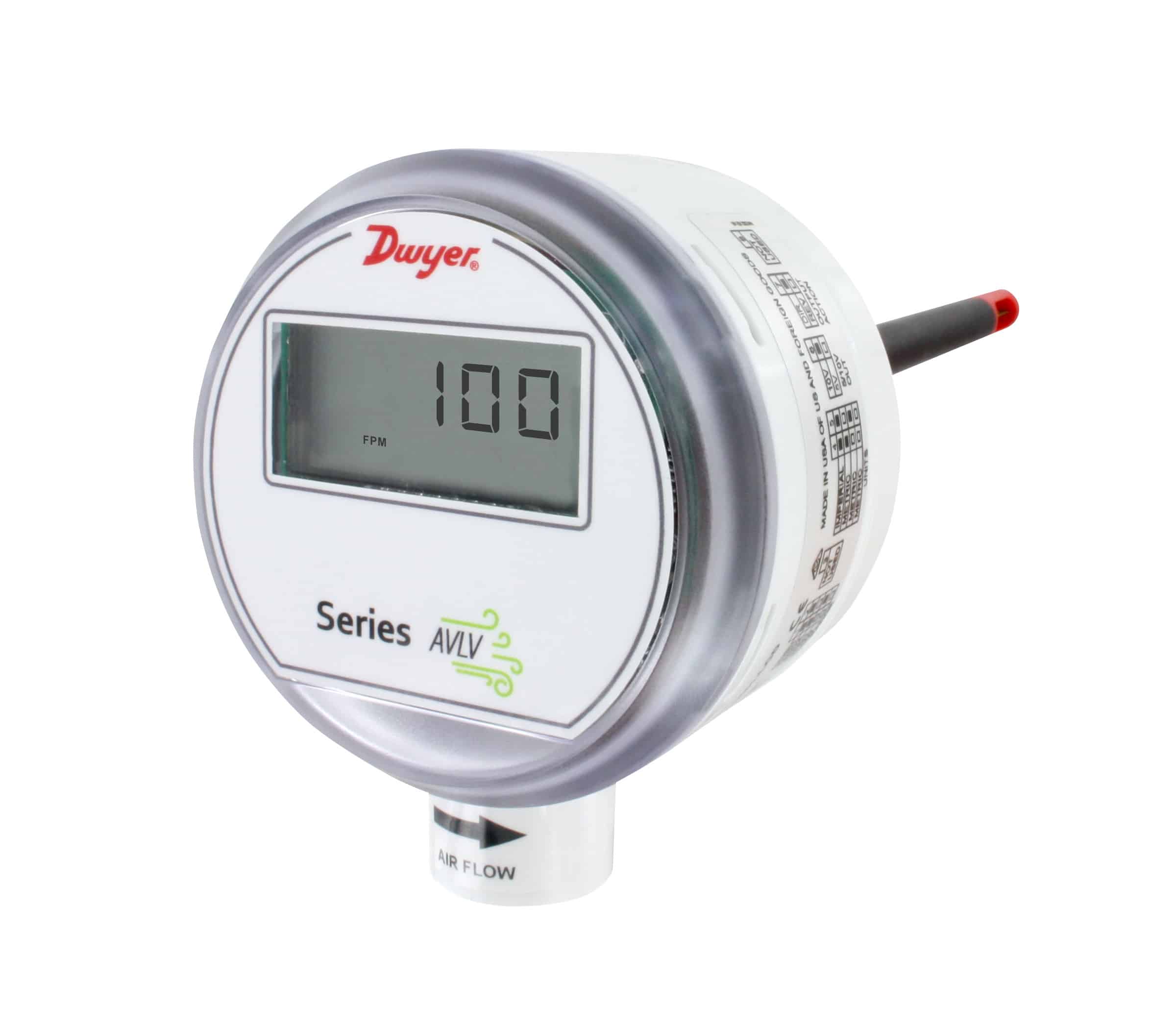
Dwyer Instruments offers a multitude of sensors for monitoring air velocity in HVAC systems. Some of this instrumentation has a simple construction (Pitot tubes, for example) while others are more complex, such as hot-wire anemometers. The initial term and first “hot-wire anemometer” was developed back in 1914 by Louie Vesso King. He is also accredited...
Explore now
From dairy to petrochemicals, several applications require monitoring or control of liquids in tanks. Wastewater facilities are among the many industries requiring meticulous observation. The technology used for this measurement is dependent upon the type of tank and its contents. Capacitive level switches, for example, detect level and send a switch signal output when the...
Explore now

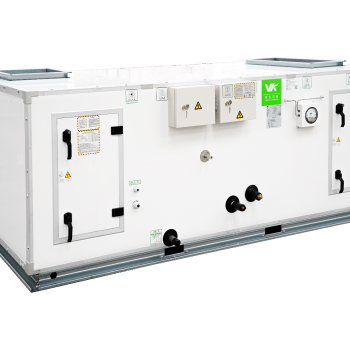 The Modular AHU (VAC series) is engineered to serve environments with stringent requirements for air quality, temperature, and humidity control. Thanks to its flexible modular design, cross-contamination prevention, microbial growth inhibition, and superior thermal insulation performance, the product is ideal for a wide range of diverse applications.
VECK - MODULAR AIR HANDLING UNIT (AHU) - VAC
Explore now
The Modular AHU (VAC series) is engineered to serve environments with stringent requirements for air quality, temperature, and humidity control. Thanks to its flexible modular design, cross-contamination prevention, microbial growth inhibition, and superior thermal insulation performance, the product is ideal for a wide range of diverse applications.
VECK - MODULAR AIR HANDLING UNIT (AHU) - VAC
Explore now
 The VECK VASW Series is a premier air-cooled screw chiller solution, specifically engineered for large-scale central air conditioning systems. By perfectly integrating advanced screw compressor technology with an intelligent control system, VECK is committed to delivering superior cooling efficiency across all weather conditions.
VECK - AIR-COOLED SCREW CHILLER - VASW
Explore now
The VECK VASW Series is a premier air-cooled screw chiller solution, specifically engineered for large-scale central air conditioning systems. By perfectly integrating advanced screw compressor technology with an intelligent control system, VECK is committed to delivering superior cooling efficiency across all weather conditions.
VECK - AIR-COOLED SCREW CHILLER - VASW
Explore now
 The VECK FCU Series is a premium line of Fan Coil Units featuring cutting-edge BLDC motor technology from China. Designed as an optimal solution, it delivers refreshing airflow, ultra-quiet operation, and exceptional energy efficiency. It is the perfect choice for central air conditioning systems in office buildings, hotels, and modern commercial projects.
VECK - FAN COIL UNIT (FCU)
Explore now
The VECK FCU Series is a premium line of Fan Coil Units featuring cutting-edge BLDC motor technology from China. Designed as an optimal solution, it delivers refreshing airflow, ultra-quiet operation, and exceptional energy efficiency. It is the perfect choice for central air conditioning systems in office buildings, hotels, and modern commercial projects.
VECK - FAN COIL UNIT (FCU)
Explore now
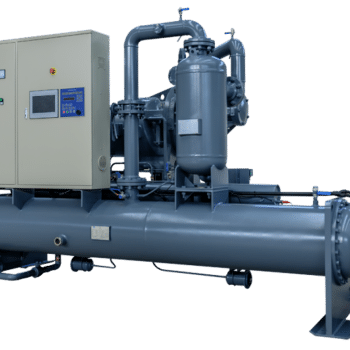 The Ebara RHSCW Series is a water-cooled screw chiller line featuring Japan's leading twin-screw compression technology. It is an optimal solution designed to provide a stable chilled water supply for central air-conditioning systems and large-scale industrial cooling processes.
EBARA-HIGH EFFICIENCY SCREW CHILLER-RHSCW
Explore now
The Ebara RHSCW Series is a water-cooled screw chiller line featuring Japan's leading twin-screw compression technology. It is an optimal solution designed to provide a stable chilled water supply for central air-conditioning systems and large-scale industrial cooling processes.
EBARA-HIGH EFFICIENCY SCREW CHILLER-RHSCW
Explore now