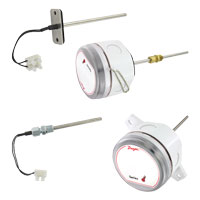
There are three main types of temperature sensors, and each one has its own strengths and weaknesses. Today we’ll be discussing the advantages/disadvantages of each RTD temperature sensors, thermistors, and thermocouples.
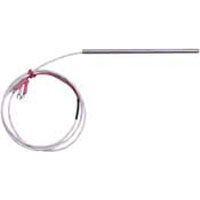
A resistance temperature detector (RTD) is made from a sensing element that changes resistance with temperature. The majority of RTDs use a platinum temperature sensing element. Platinum offers the most stable resistance versus temperature relationship over the largest temperature range. Dwyer offers 100 and 1000 ohm resistance models in DIN accuracy standards.
An RTD would be your best sensor choice for stability, accuracy, and repeatability. On the other hand, RTDs can rarely be used at high temperatures because the platinum can absorb impurities and they are slower to respond to temperature changes.
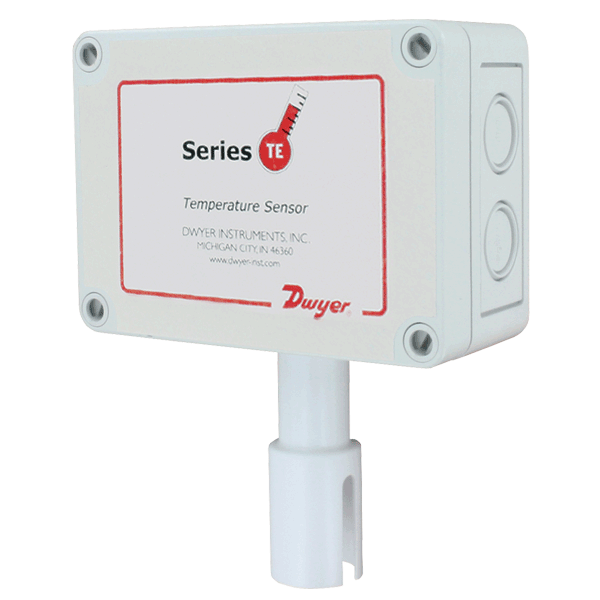
Our second type of resistance based temperature sensors is thermistors. Instead of a pure metal, like in an RTD, these sensors use a ceramic or polymer. There are two opposite types: a negative temperature coefficient (NTC) where resistance decreases as temperature rises, or positive temperature coefficient (PTC) where resistance increases as temperature rises.
Dwyer offers both of these thermistor types as a sensor, but the NTC is one of the most commonly used. Thermistors in general are the most widely used sensor for OEM and consumer device applications due to their low cost and versatility. So, what is the drawback? The accuracy is only offered within a very limited temperature range and features low stability.
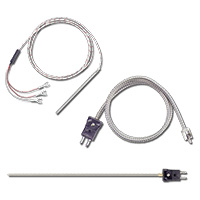
The third type is one of the most well-known types of temperature sensors in the process industry, the thermocouple or T/C sensor. They are built on the thermoelectric effect (i.e. the conversion of temperature differences to electric voltage). The concept of operation is based on the Seebeck effect, which is defined as the conversion of electricity at the junction of two different types of metal wire. The conversion of temperature differences to electric voltage does not require an external power source.
Thermocouples are widely used; if you require a wide temperature range, or have a high temperature application, and require a robust sensor then the T/C is your sensor of choice. This is the most versatile sensor available, and Dwyer offers them in most any size, shape, or form for your application.
Why don’t we all just use thermocouples then? Thermocouples can’t get the accuracy that an RTD can. Additionally, thermocouples can start drifting right upon installation so aging effects are a concern.
So we have briefly reviewed the different types of sensors Dwyer can offer for your application, and some of their limitations. In summary:
With a better understanding of the different sensor types and the advantages and disadvantages of each type, you can better choose the ideal sensor for your application. Please visit our website for additional information about Dwyer temperature sensors, or contact our technical team by email: info@bkic.vn with any questions.
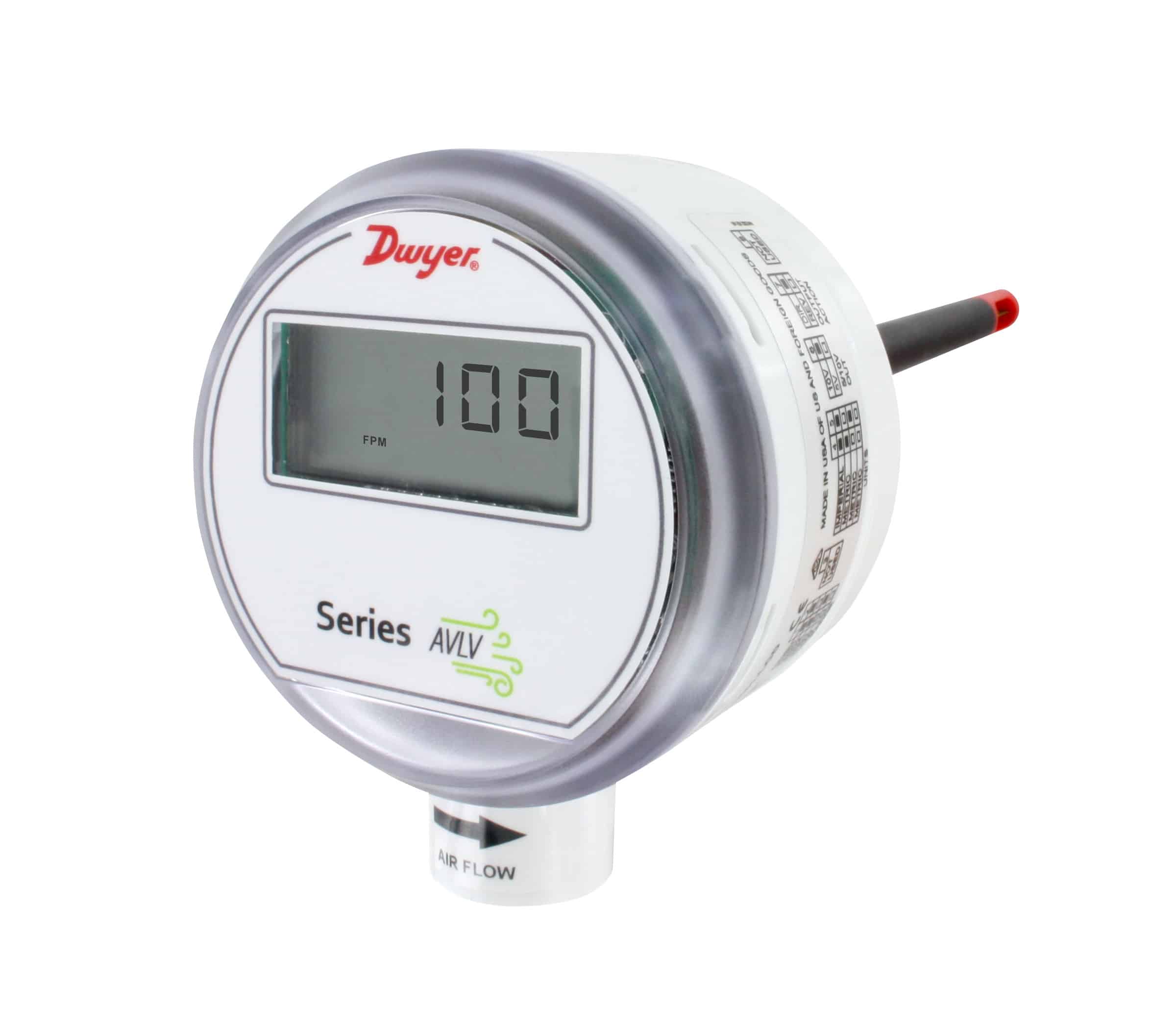
Dwyer Instruments offers a multitude of sensors for monitoring air velocity in HVAC systems. Some of this instrumentation has a simple construction (Pitot tubes, for example) while others are more complex, such as hot-wire anemometers. The initial term and first “hot-wire anemometer” was developed back in 1914 by Louie Vesso King. He is also accredited...
Explore now
From dairy to petrochemicals, several applications require monitoring or control of liquids in tanks. Wastewater facilities are among the many industries requiring meticulous observation. The technology used for this measurement is dependent upon the type of tank and its contents. Capacitive level switches, for example, detect level and send a switch signal output when the...
Explore now

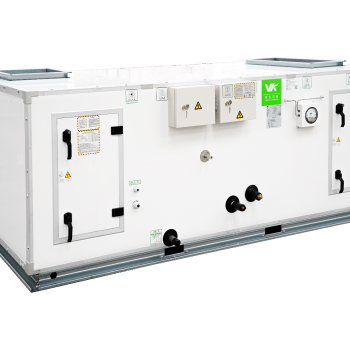 The Modular AHU (VAC series) is engineered to serve environments with stringent requirements for air quality, temperature, and humidity control. Thanks to its flexible modular design, cross-contamination prevention, microbial growth inhibition, and superior thermal insulation performance, the product is ideal for a wide range of diverse applications.
VECK - MODULAR AIR HANDLING UNIT (AHU) - VAC
Explore now
The Modular AHU (VAC series) is engineered to serve environments with stringent requirements for air quality, temperature, and humidity control. Thanks to its flexible modular design, cross-contamination prevention, microbial growth inhibition, and superior thermal insulation performance, the product is ideal for a wide range of diverse applications.
VECK - MODULAR AIR HANDLING UNIT (AHU) - VAC
Explore now
 The VECK VASW Series is a premier air-cooled screw chiller solution, specifically engineered for large-scale central air conditioning systems. By perfectly integrating advanced screw compressor technology with an intelligent control system, VECK is committed to delivering superior cooling efficiency across all weather conditions.
VECK - AIR-COOLED SCREW CHILLER - VASW
Explore now
The VECK VASW Series is a premier air-cooled screw chiller solution, specifically engineered for large-scale central air conditioning systems. By perfectly integrating advanced screw compressor technology with an intelligent control system, VECK is committed to delivering superior cooling efficiency across all weather conditions.
VECK - AIR-COOLED SCREW CHILLER - VASW
Explore now
 The VECK FCU Series is a premium line of Fan Coil Units featuring cutting-edge BLDC motor technology from China. Designed as an optimal solution, it delivers refreshing airflow, ultra-quiet operation, and exceptional energy efficiency. It is the perfect choice for central air conditioning systems in office buildings, hotels, and modern commercial projects.
VECK - FAN COIL UNIT (FCU)
Explore now
The VECK FCU Series is a premium line of Fan Coil Units featuring cutting-edge BLDC motor technology from China. Designed as an optimal solution, it delivers refreshing airflow, ultra-quiet operation, and exceptional energy efficiency. It is the perfect choice for central air conditioning systems in office buildings, hotels, and modern commercial projects.
VECK - FAN COIL UNIT (FCU)
Explore now
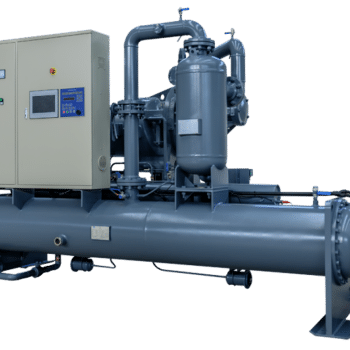 The Ebara RHSCW Series is a water-cooled screw chiller line featuring Japan's leading twin-screw compression technology. It is an optimal solution designed to provide a stable chilled water supply for central air-conditioning systems and large-scale industrial cooling processes.
EBARA-HIGH EFFICIENCY SCREW CHILLER-RHSCW
Explore now
The Ebara RHSCW Series is a water-cooled screw chiller line featuring Japan's leading twin-screw compression technology. It is an optimal solution designed to provide a stable chilled water supply for central air-conditioning systems and large-scale industrial cooling processes.
EBARA-HIGH EFFICIENCY SCREW CHILLER-RHSCW
Explore now