
Most local regulations for indoor air quality are designed around ASHRAE Standard 62. This standard specifies the minimum amount of outdoor air flow into an occupied space to be between 15 to 60 CFM per person, but more commonly building regulations require 15 to 20 CFM per person. Besides actually measuring the air flow, ASHRAE also defines indoor air quality using the concentration of carbon dioxide gas in the air. Carbon dioxide is recommended to be less than 1000 PPM. When sizing the air handling unit for a building, engineers will make the design exceed the maximum occupancy in the building or space to ensure that they will always be able to meet the minimum air requirements. In most cases, buildings or mix used spaces rarely are occupied at these maximum levels, thus the amount of conditioned air supplied is usually much greater than what is required. As building owners aim to reduce energy costs and operate buildings more efficiently, wasted energy of conditioning unneeded outside air has been a good place to start.
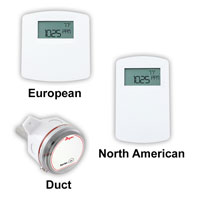
On-demand ventilation varies the amount of conditioned outside air that is used in the building or space based upon the number of occupants actually in the building or space. In order to estimate the number of occupants in the space, the concentration of carbon dioxide is measured either using a wall mounted room transmitter; or a transmitter that measures the carbon dioxide levels in the return air duct, such as the Dwyer Series CDT. Based on the concentration measured by the transmitters, the building management controller varies the damper position or the fan speed to provide the proper air flow into the space.
Carbon dioxide transmitters also help to maximize the efficiency of applications using VRF (Variable Refrigerant Flow) or VRV (Variable Refrigerant Volume) technology. One of the main reasons these systems are gaining popularity worldwide is that they provide increased zone control. Since refrigerant lines run through buildings to each individual space, these systems are capable of simultaneously heating or cooling and conditioning single zones at a reasonable cost. This is advantageous in applications such as office buildings, hotels, hospitals and schools because it can deliver personalized comfort. In these instances, wall mount carbon dioxide sensors, such as the Series CDT, are mounted in the space to give feedback to the control system on whether a particular space/zone is occupied.

With the growth of LEED and green building initiatives, on demand ventilation applications are growing. The key LEED credit of indoor environmental quality or EQ requires CO2 concentration monitoring in densely populated spaces (defined as an occupancy level of more than 25 persons per 1,000 sq ft). Whether it’s a small conference room or a large auditorium, the specification applies. Moreover, government buildings, schools, high rise office buildings, and restaurants are just a few examples of building types that are increasingly heading for on-demand ventilation.
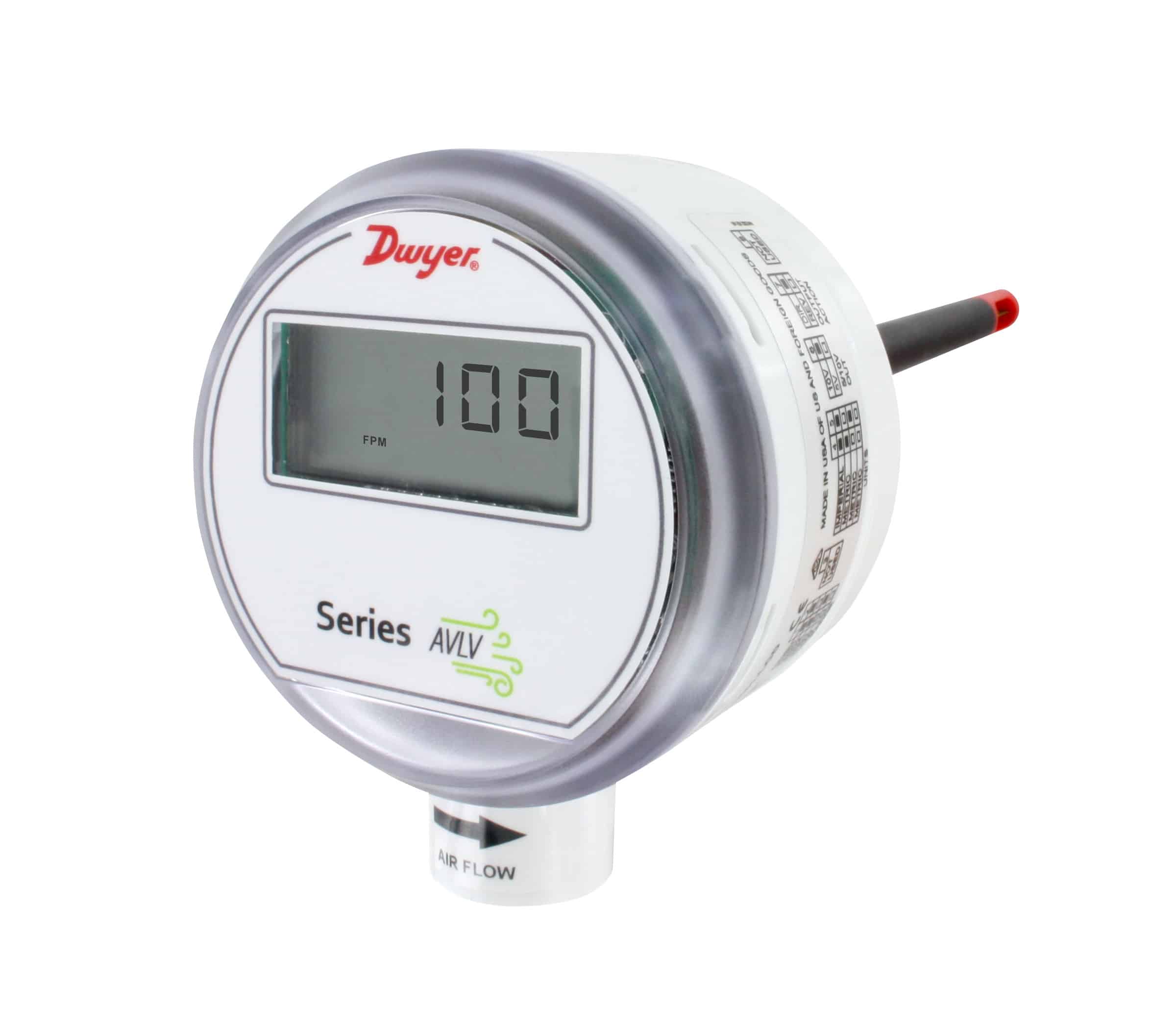
Dwyer Instruments offers a multitude of sensors for monitoring air velocity in HVAC systems. Some of this instrumentation has a simple construction (Pitot tubes, for example) while others are more complex, such as hot-wire anemometers. The initial term and first “hot-wire anemometer” was developed back in 1914 by Louie Vesso King. He is also accredited...
Explore now
From dairy to petrochemicals, several applications require monitoring or control of liquids in tanks. Wastewater facilities are among the many industries requiring meticulous observation. The technology used for this measurement is dependent upon the type of tank and its contents. Capacitive level switches, for example, detect level and send a switch signal output when the...
Explore now

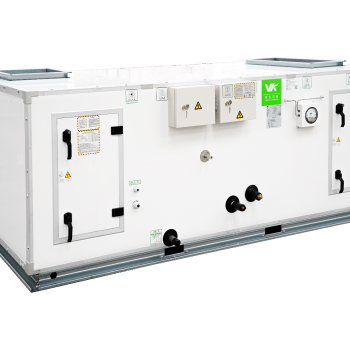 The Modular AHU (VAC series) is engineered to serve environments with stringent requirements for air quality, temperature, and humidity control. Thanks to its flexible modular design, cross-contamination prevention, microbial growth inhibition, and superior thermal insulation performance, the product is ideal for a wide range of diverse applications.
VECK - MODULAR AIR HANDLING UNIT (AHU) - VAC
Explore now
The Modular AHU (VAC series) is engineered to serve environments with stringent requirements for air quality, temperature, and humidity control. Thanks to its flexible modular design, cross-contamination prevention, microbial growth inhibition, and superior thermal insulation performance, the product is ideal for a wide range of diverse applications.
VECK - MODULAR AIR HANDLING UNIT (AHU) - VAC
Explore now
 The VECK VASW Series is a premier air-cooled screw chiller solution, specifically engineered for large-scale central air conditioning systems. By perfectly integrating advanced screw compressor technology with an intelligent control system, VECK is committed to delivering superior cooling efficiency across all weather conditions.
VECK - AIR-COOLED SCREW CHILLER - VASW
Explore now
The VECK VASW Series is a premier air-cooled screw chiller solution, specifically engineered for large-scale central air conditioning systems. By perfectly integrating advanced screw compressor technology with an intelligent control system, VECK is committed to delivering superior cooling efficiency across all weather conditions.
VECK - AIR-COOLED SCREW CHILLER - VASW
Explore now
 The VECK FCU Series is a premium line of Fan Coil Units featuring cutting-edge BLDC motor technology from China. Designed as an optimal solution, it delivers refreshing airflow, ultra-quiet operation, and exceptional energy efficiency. It is the perfect choice for central air conditioning systems in office buildings, hotels, and modern commercial projects.
VECK - FAN COIL UNIT (FCU)
Explore now
The VECK FCU Series is a premium line of Fan Coil Units featuring cutting-edge BLDC motor technology from China. Designed as an optimal solution, it delivers refreshing airflow, ultra-quiet operation, and exceptional energy efficiency. It is the perfect choice for central air conditioning systems in office buildings, hotels, and modern commercial projects.
VECK - FAN COIL UNIT (FCU)
Explore now
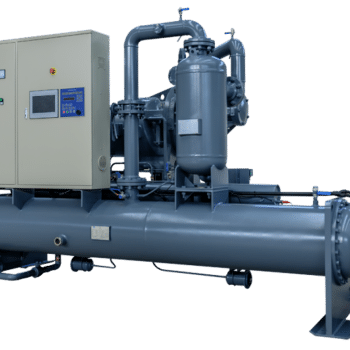 The Ebara RHSCW Series is a water-cooled screw chiller line featuring Japan's leading twin-screw compression technology. It is an optimal solution designed to provide a stable chilled water supply for central air-conditioning systems and large-scale industrial cooling processes.
EBARA-HIGH EFFICIENCY SCREW CHILLER-RHSCW
Explore now
The Ebara RHSCW Series is a water-cooled screw chiller line featuring Japan's leading twin-screw compression technology. It is an optimal solution designed to provide a stable chilled water supply for central air-conditioning systems and large-scale industrial cooling processes.
EBARA-HIGH EFFICIENCY SCREW CHILLER-RHSCW
Explore now